The Dataset node holds the raw data every downstream node ultimately reads from. It has no upstream connection — it's where a flow starts.
What it needs
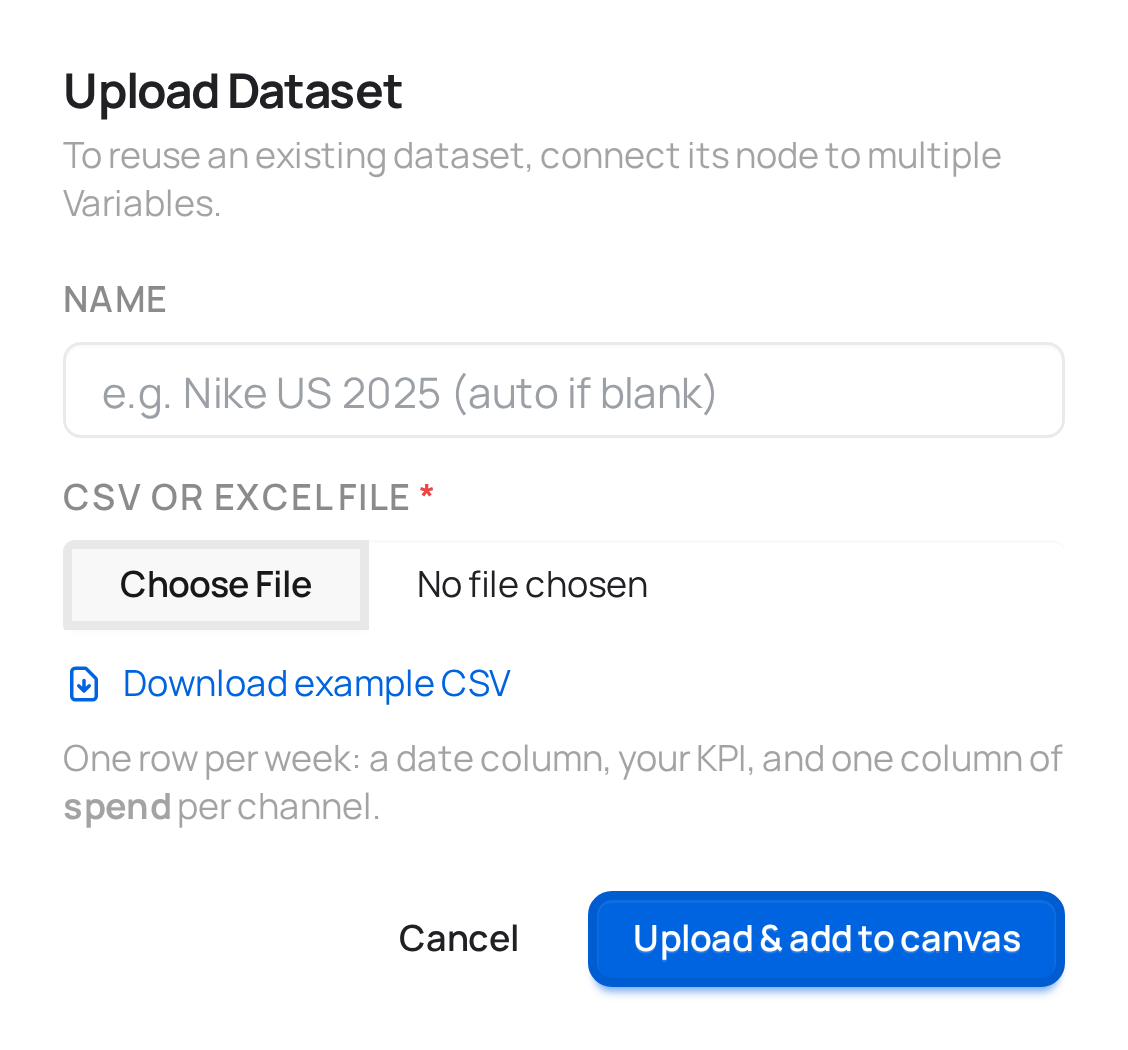
- A CSV or Excel file (
.csv,.xlsx,.xls), one row per date, one column per metric or channel. There's no fixed column-name requirement — what each column means is decided later, in Variables. - A name (optional) — if you leave it blank, meryn names it for you.
Getting the shape right
If you're not sure what meryn expects, the upload modal has a Download example CSV button — a realistic 104-week sample with a date column, several media channels, a couple of non-media covariates, and revenue. Match that shape and you can't go far wrong.
One thing worth knowing before you upload: dates should be in ISO format
(YYYY-MM-DD). Other formats are usually fine — meryn tries to detect the
format your file uses — but an ambiguous format (is 03/04/2024 March 4th or
April 3rd?) can silently misread your date column. If your file isn't ISO,
you'll see a warning when you get to the Period step, which is where the
consequence would actually show up (a suspiciously short or empty date
range).
What happens after upload
meryn reads the header row to list your columns and shows you row/column counts so you can sanity-check the upload immediately. The file itself is stored once — every Variables node built from this Dataset reads the same underlying file, so re-uploading isn't something you do per-model.
What connects here
Only Variables. A Dataset node's only job is to exist so a Variables node can be mapped against it.